Stroller Frame Joint: Load at the Fold Hinge
A stroller fold hinge is a live structural joint that transfers occupant and cargo load through overlapping metal tub...
Read it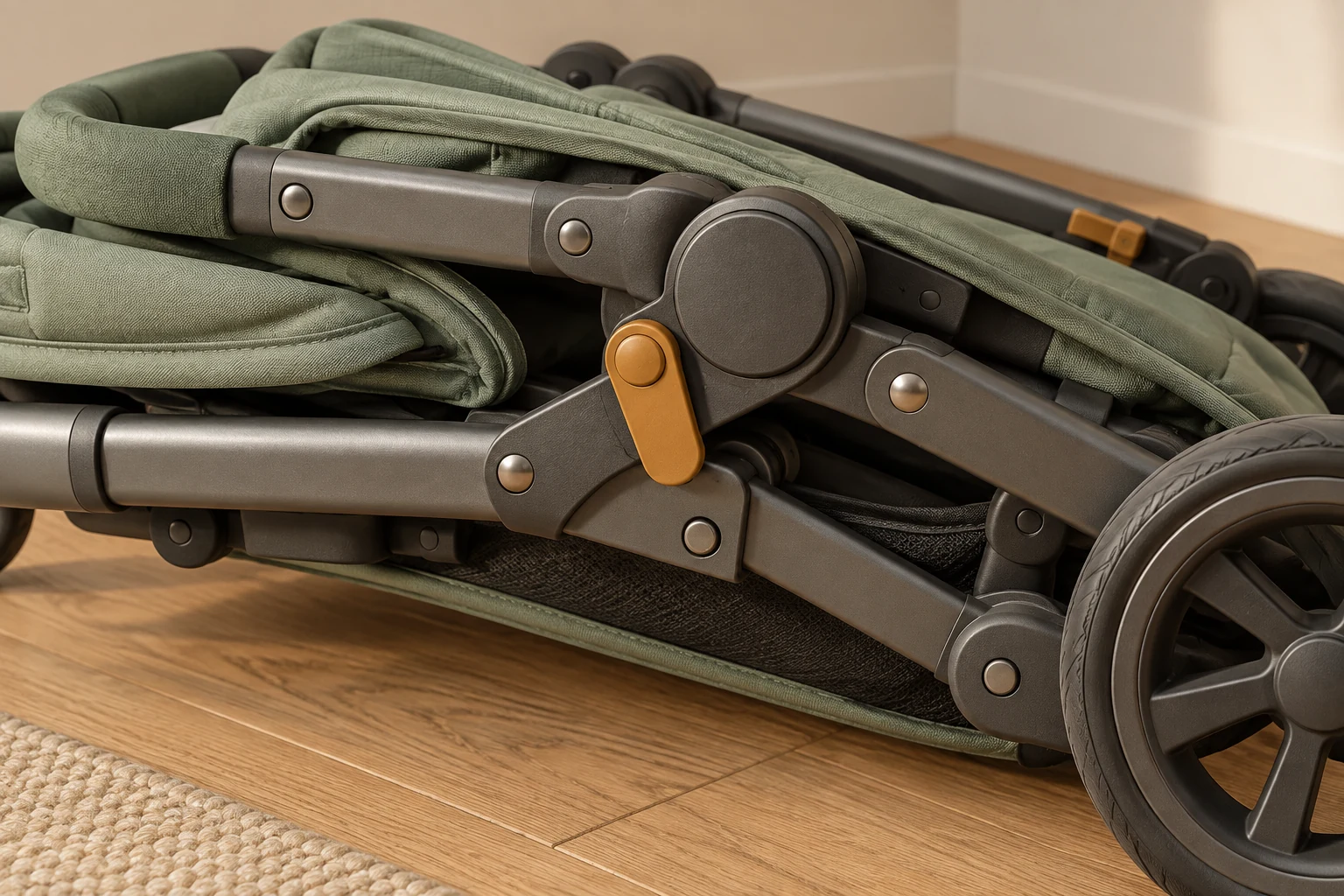
All Strollers & Travel Systems articles from Baby Gear Made Clear.
A stroller fold hinge is a live structural joint that transfers occupant and cargo load through overlapping metal tub...
Read itA stroller canopy's UPF rating measures how much ultraviolet radiation the fabric absorbs or reflects before it reach...
Read itStroller brake pads use friction and mechanical wedging to resist wheel rotation. This piece explains the materials a...
Read itA stroller suspension fork uses spring and damper geometry to convert pavement impact energy into controlled compress...
Read itA travel system's click-in dock uses a latching receiver and rigid frame to transfer an infant carrier's load directl...
Read itThe mechanics of a five-point stroller harness — how five separate straps distribute restraint force across the body.
Read articleThe mechanics behind a stroller's swivel-lock front wheels — how a pin engages to trade maneuverability for straight-line stability.
Read articleThe mechanics of a stroller's fold-locking system — how a spring-loaded catch keeps the frame rigid when open.
Read article